You Won't Believe These Hidden Protected Wonders in Milos, Greece
If you think Milos is just about Sarakiniko’s moon-like rocks, think again. I was blown away discovering how much of this island remains untouched, protected by nature reserves and coastal conservation efforts. From secret coves accessible only by boat to volcanic landscapes shaped by millennia, Milos offers raw, unspoiled beauty. This isn’t just another tourist guide — it’s a real look at the wild side of an Aegean gem most visitors completely miss. While many come for the iconic white cliffs and turquoise waters, few realize they’re stepping into a carefully preserved ecosystem where geology, biodiversity, and human stewardship intersect. These protected spaces aren’t hidden because they’re inaccessible — they’re safeguarded because they matter.
Why Protected Areas Matter in Milos
Milos, one of the Cyclades islands in the southern Aegean Sea, stands apart not only for its striking scenery but also for its extraordinary geological history. Formed through intense volcanic activity over hundreds of thousands of years, the island features dramatic rock formations, hot springs, and mineral-rich soils that support unique plant life. This volcanic origin has created a landscape unlike any other in Greece — one that continues to evolve and captivate scientists and travelers alike. But beyond its visual drama lies a fragile web of ecosystems that depend on careful protection to survive.
The establishment of protected areas across Milos is not merely about preserving postcard views; it is a strategic effort to conserve rare species, prevent soil erosion, and maintain water quality along the coastline. Several regions of the island are included in the European Union’s Natura 2000 network, a continent-wide initiative designed to protect biodiversity while allowing sustainable human activity. These designations mean that development is restricted, scientific monitoring is ongoing, and conservation practices are integrated into local policies. For visitors, this translates into cleaner beaches, healthier marine life, and more authentic natural experiences.
Equally important is the cultural dimension of these protections. Milos has been inhabited since prehistoric times, with archaeological evidence dating back to the Neolithic period. The island was once a major center for obsidian mining, and remnants of ancient quarries still dot the hillsides. Protecting these landscapes ensures that both natural and historical heritage are preserved together. When visitors walk through a protected zone, they are not only seeing untouched nature — they are stepping into layers of time that tell the story of human ingenuity and environmental adaptation.
As tourism to Milos grows, so does the pressure on its infrastructure and ecosystems. More flights, increased ferry traffic, and rising demand for accommodations threaten to overwhelm the island’s delicate balance. Yet, rather than resist tourism altogether, local authorities and environmental groups have chosen a path of integration — welcoming travelers while setting clear boundaries. This approach recognizes that tourism can be a force for good when managed responsibly. By directing visitors toward eco-conscious practices and designated trails, Milos demonstrates how conservation and economic vitality can coexist.
Sarakiniko & Its Protected Status: More Than Just a Photo Spot
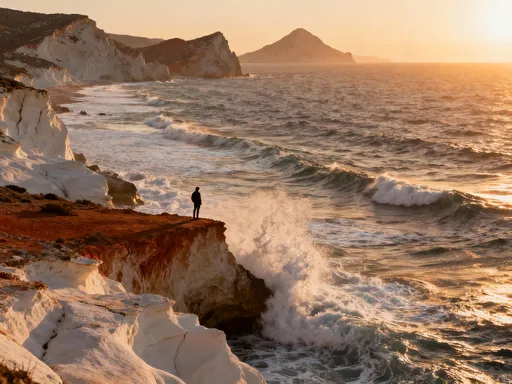
Sarakiniko is arguably the most photographed site on Milos, renowned for its smooth, lunar-like rock formations carved by wind and sea. Its stark white volcanic ash and tuff cliffs contrast sharply with the deep blue of the Aegean, creating a surreal visual effect that draws thousands each season. But behind the Instagram fame lies a site of significant ecological and geological value. Sarakiniko is not just a backdrop — it is a living laboratory shaped by natural forces and protected under European environmental law.
The area is officially part of the Natura 2000 network due to its rare coastal vegetation and vulnerable geological structure. The soft volcanic rock is highly susceptible to erosion, especially from foot traffic and unregulated access. What may seem like a solid surface is, in fact, fragile and slow to recover from damage. To mitigate human impact, authorities have implemented designated pathways, limited vehicle access, and signage explaining the importance of staying on marked trails. These rules are not meant to restrict enjoyment but to ensure that future generations can experience the same awe-inspiring landscape.
Despite these efforts, challenges remain. During peak months, overcrowding can strain the site’s capacity, leading to trampled vegetation and littering. Some visitors climb on unstable rock edges for photos, risking personal safety and accelerating erosion. In response, local rangers conduct regular patrols, and awareness campaigns have been launched to educate tourists about responsible behavior. These include multilingual brochures, social media outreach, and collaborations with tour operators who emphasize low-impact visits.
What makes Sarakiniko truly special is not only its appearance but its role as a symbol of what can be lost without stewardship. It serves as a reminder that beauty requires care. When travelers take a moment to read the signs, stay on the path, and avoid leaving behind waste, they contribute to a larger mission of preservation. The next time you stand at the edge of those white cliffs, looking out over the endless sea, remember that you are standing in a protected space — one that depends on mindfulness to endure.
The Forgotten Side: Southern Coastline and Pachia Island
While much of Milos’ tourism focuses on the northern and western shores, the southern coastline remains one of the island’s best-kept secrets. Remote, rugged, and sparsely visited, this region offers a glimpse into Milos as it existed before roads and resorts. Here, steep cliffs plunge into crystal-clear waters, and small coves open up only to those willing to hike or arrive by boat. Among these secluded spots, Pachia Island — a small uninhabited islet just off the southern tip — plays a crucial role in the island’s ecological network.
Pachia is designated as a protected habitat under national conservation programs due to its importance for seabird populations and endemic plant species. The islet provides nesting grounds for species such as the Eleonora’s falcon and the Yelkouan shearwater, both of which are sensitive to human disturbance. Its rocky terrain supports drought-resistant shrubs and wildflowers found nowhere else in the Cyclades. Because of this ecological sensitivity, landing on Pachia is restricted, and only scientific researchers or authorized eco-tours may visit under strict guidelines.
For travelers, the best way to experience Pachia is through responsible boat excursions that maintain a safe distance from the shore. Several local operators offer educational tours that explain the islet’s significance while allowing passengers to observe birdlife and marine ecosystems from the water. These tours often include commentary from marine biologists or naturalists, turning a scenic trip into an immersive learning experience. By supporting these certified green operators, visitors help fund ongoing conservation efforts and promote sustainable tourism models.
The southern coast of Milos also includes hidden beaches like Agios Ioannis and Tsigrado’s lesser-known southern inlet, accessible only by foot or kayak. These areas are not formally off-limits, but they are quietly protected due to fragile dune systems and nesting sites for loggerhead sea turtles. Signs advising minimal impact are posted at trailheads, and local volunteers conduct seasonal cleanups to remove debris carried in by currents. Visiting these places requires a mindset shift — from seeking conquest to practicing reverence.
Exploring the Volcanic Trail: From Paleochori to Kleftiko
Stretching along the western coast of Milos, the Volcanic Trail is a natural corridor linking some of the island’s most geologically significant sites. Beginning near the village of Paleochori, known for its warm offshore springs, and extending south to the legendary sea caves of Kleftiko, this route showcases Milos’ dynamic origins. The waters here are rich in minerals, and the seabed reveals hydrothermal vents and colorful sediment layers that attract divers and researchers alike. This entire stretch falls within a marine protected area, where fishing is regulated and anchoring is prohibited in sensitive zones.
Paleochori’s hot springs are a prime example of Milos’ geothermal activity. Here, warm water bubbles up from the seabed, mixing with the cooler sea to create a natural spa-like experience. While swimming is allowed, visitors are encouraged to avoid using soaps or lotions that could disrupt the delicate chemical balance. Local authorities have installed floating buoys to mark safe swimming areas and prevent boats from dropping anchor too close to the vents. These small measures help protect the site’s integrity while still allowing public enjoyment.
Further south, Kleftiko presents a dual identity — famous as a filming location for international productions and revered as an ecologically sensitive marine zone. Once a hideout for pirates, as its name suggests, Kleftiko is now a sanctuary for marine life. Its labyrinth of sea caves and submerged arches provides shelter for fish, octopuses, and crustaceans. Snorkelers and divers often spot groupers, damselfish, and even endangered Mediterranean monk seals in these waters. To preserve this biodiversity, strict guidelines govern visitor access: only a limited number of boats are permitted daily, and all waste must be carried back to shore.
Sustainable snorkeling practices are emphasized throughout the region. Visitors are advised to avoid touching the rocks or coral-like formations, refrain from feeding fish, and use reef-safe sunscreen. Some eco-tours provide underwater slates to help guests identify species without disturbing them. These efforts not only protect the environment but also enhance the quality of the experience — when nature thrives, so does wonder. The Volcanic Trail is more than a scenic route; it is a living testament to the power of conservation in action.
Hidden Coves Only Locals Knew — Until Now
For decades, certain beaches on Milos were known only to fishermen and longtime residents. Sheltered by cliffs and reachable only by narrow dirt paths or by sea, these coves remained hidden from mainstream tourism. Among them are Tsigrado, a dramatic beach accessed through a narrow crevice in the rock, and Firopotamos, a quiet fishing village with a pebbled shore surrounded by red volcanic cliffs. Though increasingly discovered by travelers, these spots retain a sense of seclusion — not because they are unknown, but because their fragile ecosystems demand caution.
Tsigrado, in particular, is protected due to its unstable dune system and rare coastal vegetation. The beach is enclosed by steep walls that limit airflow and create a microclimate supporting specialized plants. Because the entrance involves sliding down a tight passage in the rock, foot traffic is naturally limited — a fortunate constraint that has helped preserve the site. Still, increased visitation has prompted local officials to install informational boards explaining the importance of staying off the dunes and avoiding plant trampling. Even small actions, like stepping on a patch of lichen, can set back recovery for years.
Firopotamos, once a quiet anchorage for small boats, has begun attracting eco-conscious travelers drawn to its authenticity. Unlike busier villages, it lacks large hotels or commercial shops, maintaining a peaceful rhythm tied to the sea. The bay is part of a proposed expansion of the marine protected area, recognizing its value as a spawning ground for fish and a stopover for migratory birds. Visitors are encouraged to support the local tavernas that use sustainable fishing practices and to dispose of waste properly, as there are no large-scale waste management facilities nearby.
Other lesser-known spots include Mandrakia, with its colorful traditional windmills and tidal pools, and Provatas, a remote beach with golden sand and minimal facilities. These places are not marked by luxury amenities but by their raw connection to the island’s essence. To visit them mindfully means arriving prepared — with water, snacks, and a bag for trash — and leaving no trace. The beauty of these hidden coves lies not in perfection, but in their unaltered state, shaped by nature alone.
How to Be a Responsible Traveler in Sensitive Zones
As access to Milos’ protected areas becomes easier, the responsibility of visitors grows. Every choice — from where you step to what you leave behind — has an impact. The key to responsible travel lies in awareness and intention. Simple actions, such as staying on marked trails, can prevent soil erosion and protect nesting sites. Avoiding single-use plastics helps reduce pollution that often ends up in the sea. Even seemingly harmless activities, like flying drones near bird colonies, can cause stress and displacement — and in many protected zones, drone use is prohibited without a permit.
One of the most effective ways to minimize impact is to choose certified eco-tours and licensed guides. These operators are trained in environmental protocols and often contribute financially to conservation projects. They know the best times to visit to avoid crowding, understand seasonal restrictions, and can provide context that enriches the experience. Instead of rushing from one photo spot to the next, travelers on guided eco-tours often gain deeper appreciation through storytelling, science, and local knowledge.
Technology can also support mindful exploration. Several free apps and digital maps now display the boundaries of protected areas in Milos, including no-anchor zones and restricted hiking trails. Using these tools before setting out helps ensure compliance with regulations. Additionally, some apps allow users to report environmental concerns, such as illegal dumping or damaged signage, directly to local authorities. This kind of citizen engagement strengthens community-led conservation.
Supporting local initiatives is another powerful way to make a difference. Whether it’s donating to a beach cleanup fund, purchasing handmade goods from island artisans, or dining at restaurants that source ingredients locally, every action contributes to a sustainable economy. When tourism revenue stays within the community, it incentivizes the protection of natural resources. Being a responsible traveler doesn’t mean sacrificing enjoyment — it means enhancing it through respect.
The Future of Milos: Conservation Meets Tourism Growth
The story of Milos is still being written, shaped by the choices of residents, policymakers, and visitors alike. As the island gains popularity, it faces real challenges: seasonal overcrowding, strain on freshwater resources, and the need for improved waste management. New construction, if unchecked, could encroach on protected zones. Yet, there is also hope. Community-led efforts are emerging across the island — from youth environmental groups organizing cleanups to cooperatives promoting organic farming and renewable energy.
Local authorities are working with environmental organizations to develop long-term sustainability plans. These include proposals for a circular waste system, expanded public transportation to reduce car use, and incentives for green building practices. Education plays a central role, with schools incorporating ecology into their curricula and visitors receiving orientation materials upon arrival. The goal is not to limit tourism, but to redefine it — shifting from mass consumption to meaningful connection.
Travelers have a vital role in this transformation. By choosing to visit during shoulder seasons, supporting eco-certified businesses, and respecting protected areas, they help shape a future where Milos remains wild, beautiful, and resilient. Every footprint left should be a light one. The island does not belong to any one group — it belongs to time, to nature, and to those who choose to protect it.
Milos is more than a summer escape — it’s a living landscape shaped by fire, sea, and time. Its protected areas aren’t barriers to exploration but invitations to experience nature with respect. By choosing to visit mindfully, you become part of the solution, helping preserve the island’s magic long after you leave. The real beauty of Milos isn’t just in its views — it’s in its survival.