You Won’t Believe This Himalayan Skyline – Boudhanath’s Hidden Cityscape Magic
Nestled on the outskirts of Kathmandu, Boudhanath isn’t just a spiritual hub—it’s a visual masterpiece. I stood there at golden hour, camera in hand, completely stunned by the dome glowing under prayer flags dancing in the wind. The chaotic charm of Nepal’s streets melts into something serene here, where ancient stupas meet mountain-framed skylines. If you're chasing *that* shot—the one that stops scrollers mid-swipe—this is it. Trust me, this cityscape feels like stepping into a living postcard.
First Glimpse: The Moment Boudhanath Took My Breath Away
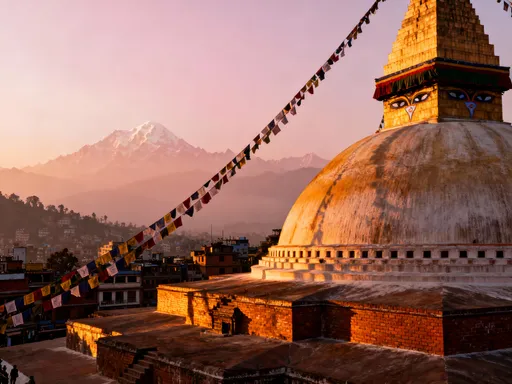
Approaching Boudhanath for the first time is like stepping into a dream woven from stone, prayer, and sky. From the eastern approach, the full grandeur of the stupa reveals itself in a breathtaking crescendo. The massive white dome rises with quiet authority, crowned by its golden spire and the all-seeing eyes of Buddha gazing out in four directions. Behind it, the distant ridges of the Himalayas fade into morning mist, while Kathmandu’s urban sprawl—low-rise homes, red-tiled rooftops, and occasional concrete buildings—stretches toward the horizon. The contrast is immediate and powerful: ancient stillness against modern motion, spiritual focus amid urban rhythm.
What sets this moment apart is not just the scale of the stupa, but the way light transforms it. During sunrise and sunset, the dome catches the sun like polished pearl, radiating warmth that softens the edges of surrounding buildings. Prayer flags strung across the perimeter flutter in constant motion, their vibrant blues, reds, whites, and greens creating a living mosaic against the pale sky. The air hums with the low chant of mantras—"Om Mani Padme Hum"—repeated by pilgrims walking the kora, the clockwise path around the stupa. It’s a multisensory experience where sound, color, and sacred geometry converge.
For photographers and travelers alike, this first view offers an unparalleled composition. The stupa stands as the undeniable centerpiece, yet the surrounding cityscape adds depth and narrative. Satellite dishes perch on rooftops just behind prayer wheels. Clotheslines stretch between buildings, their laundry swaying like modern-day banners beneath centuries-old shrines. This blend of the timeless and the everyday creates a dynamic canvas that changes with every shift in light and weather. No two visits feel the same, and that unpredictability is part of its magic.
Why Boudhanath? The Allure of Sacred Urban Landscapes
Boudhanath challenges the conventional idea of a skyline. Unlike the steel-and-glass towers of New York, Dubai, or Tokyo, this is a cityscape built on faith, community, and organic growth. The stupa, believed to house relics of the Buddha, has stood for over a thousand years, surviving earthquakes, political shifts, and waves of modernization. It is not a monument frozen in time, but one that lives and breathes within the daily rhythm of the city. This integration of the sacred and the urban is what gives Boudhanath its unique emotional resonance.
The stupa functions as both a religious focal point and a visual anchor. Its symmetry, proportions, and symbolic design—representing the elements of earth, water, fire, air, and space—create a sense of harmony that extends into the surrounding neighborhood. Monasteries with intricately carved wooden windows line the perimeter, their upper floors often converted into guesthouses or meditation centers. Families live in homes built around courtyards, their lives intertwined with the spiritual pulse of the site. There are no barriers separating the temple from the town; instead, they coexist in a delicate, lived-in balance.
Compare this to typical city skylines, where verticality often symbolizes power and progress, and Boudhanath stands as a quiet counterpoint. Here, height is not about dominance but about aspiration—toward enlightenment, compassion, and inner peace. The golden spire reaches skyward, not to assert human achievement, but to invite contemplation. The absence of skyscrapers allows the natural landscape to remain visible, with the Himalayan foothills forming a soft backdrop that grounds the entire scene in place and context. This authenticity, this refusal to conform to modern urban templates, is what draws travelers seeking something deeper than postcard views.
Moreover, Boudhanath offers a rare example of cultural continuity. Despite the influx of tourists and the pressures of urban development, the site remains a living center of Tibetan Buddhist practice. Monks in maroon robes chant in dimly lit shrines, butter lamps flicker beside statues of deities, and families gather to spin prayer wheels in quiet devotion. This continuity adds layers of meaning to every photograph, every memory formed here. It’s not just a place to see—it’s a place to feel, to reflect, and to remember.
Golden Hour Glory: Chasing the Perfect Light
If there’s a single time when Boudhanath reveals its full magic, it’s during golden hour—those fleeting moments just after sunrise and before sunset when the light turns soft, warm, and forgiving. At dawn, the first rays of sun catch the golden spire, setting it ablaze in a halo of light. The dome glows with an inner radiance, as if illuminated from within. Shadows stretch long across the plaza, adding depth and dimension to the scene. The air is still, the crowds thinner, and the atmosphere hushed—perfect for capturing both wide-angle panoramas and intimate details.
Sunset brings a different kind of drama. As the sun dips behind the hills, the sky shifts through hues of amber, rose, and lavender, reflecting off the stupa’s gilded elements. The prayer flags, backlit by the fading sun, appear almost translucent, their colors intensified. The plaza fills with pilgrims completing their evening kora, their silhouettes moving in slow, meditative circles. This is when the energy of the site feels most palpable—a blend of devotion and beauty that can’t be staged or replicated.
For photographers, preparation is key. A wide-angle lens (between 16-35mm) is ideal for capturing the full scale of the stupa and its surroundings. A tripod helps stabilize long exposures, especially during low-light conditions at dawn or dusk. A polarizing filter can reduce glare on the dome and enhance the saturation of the prayer flags. But beyond gear, timing and positioning matter most. The upper floors of nearby cafes and guesthouses offer elevated vantage points without obstructing views or disrupting rituals. The rooftop of the Yangsel Boutique or the terrace of the Tibetan Refugee Self Help Center provide unobstructed sightlines and comfortable spaces to wait for the perfect moment.
Weather also plays a crucial role. Clear mornings after overnight rain often yield the sharpest visibility, with the air washed clean and the mountains briefly visible in the distance. November to February tends to offer the most stable conditions, with low humidity and minimal haze. While monsoon season (June to September) brings lush greenery and dramatic clouds, it also increases fog and rain, which can obscure views. Still, a misty morning can create a moody, ethereal atmosphere—ideal for more artistic interpretations of the site.
Beyond the Stupa: Framing the Full Cityscape
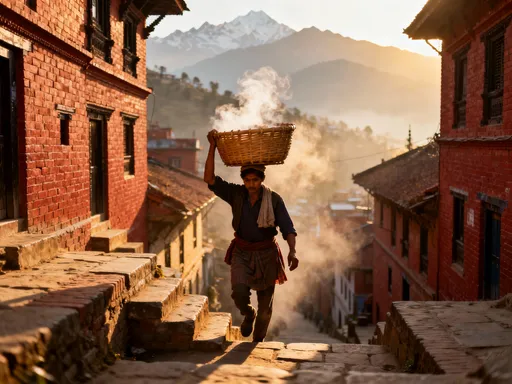
While the stupa is the heart of Boudhanath, the true richness of its cityscape lies in the layers that surround it. Narrow alleyways branch off from the main plaza, leading into a labyrinth of homes, shops, and hidden courtyards. These passages are lined with prayer wheels, their metal casings worn smooth by countless hands. Above them, rooftops form an uneven skyline of terracotta tiles, corrugated metal, and satellite dishes—each telling a story of adaptation and coexistence.
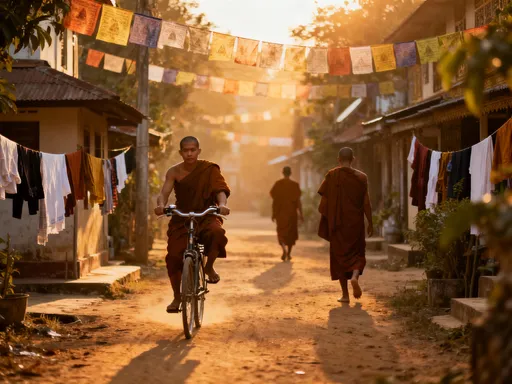
From elevated viewpoints, the urban fabric unfolds in intricate detail. Multi-tiered monasteries with golden roofs nestle between residential buildings, their prayer halls opening onto small balconies where monks gather to chant. Clotheslines strung between homes carry brightly colored garments that flutter like flags, echoing the sacred banners above. A child’s bicycle leans against a wall, a plastic toy soldier lies forgotten near a shrine, and a cat naps on a sun-warmed ledge—small, human moments that ground the grandeur in everyday life.
One of the most compelling aspects of this cityscape is its verticality. Unlike planned cities with uniform zoning, Boudhanath has grown organically, with homes, temples, and businesses stacked and interwoven. A family kitchen might open onto a rooftop where butter lamps are prepared for a monastery. A small shop selling incense and prayer beads operates beneath a room where meditation classes are held. This layering creates a sense of density and intimacy that’s absent in more sterile urban environments.
For visual storytelling, these contrasts are gold. A single frame can include a monk in traditional robes walking past a neon-lit noodle stall, or a centuries-old stupa reflected in the glass of a modern storefront. These juxtapositions aren’t jarring—they feel natural, even harmonious. They speak to a culture that values tradition without rejecting change, that honors the sacred without isolating it from daily life. Capturing this balance requires patience and observation, but the reward is a photograph that tells a deeper story than beauty alone.
Cultural Texture in Every Frame
What transforms Boudhanath from a beautiful place into a meaningful destination is the presence of people. Their rituals, routines, and quiet moments of devotion infuse the cityscape with warmth and authenticity. A woman in a red sari kneels before a small shrine, lighting a butter lamp with a trembling hand. A group of elderly men sit on a low wall, spinning handheld prayer wheels as they murmur mantras. A street vendor stirs a pot of steaming *momos*, his breath visible in the cool morning air, while a monk pauses to buy a parcel wrapped in banana leaf.
These interactions are not performances for tourists. They are real, unscripted moments of life unfolding in a sacred space. And they are what give photographs their soul. A perfectly composed shot of the stupa at sunrise is striking, but add a pilgrim in the foreground, hands pressed together in prayer, and the image gains emotional weight. It becomes a window into a world where spirituality is not separate from life, but woven into its fabric.
Even the sounds contribute to the texture. The rhythmic clang of prayer wheels, the crackle of butter lamps, the occasional burst of laughter from a child playing near the plaza—all of it forms a soundtrack that lingers in memory. At night, when the crowds thin and the lights dim, the hum of chanting from nearby monasteries fills the air like a lullaby. These sensory details anchor the visual experience, making it more than just a series of snapshots.
For visitors, the invitation is not just to observe, but to participate respectfully. Walking the kora, even once, offers a deeper connection to the site. Spinning a prayer wheel, lighting a lamp, or simply sitting quietly on a bench can shift one’s perspective from spectator to participant. These small acts, when done with sincerity, create memories that outlast any photograph. They remind us that the most powerful travel experiences are not about what we see, but how we feel.
Navigating the Area Like a Pro: Logistics That Won’t Kill the Vibe
Getting to Boudhanath from central Kathmandu is straightforward and affordable. Taxis are readily available and take about 20–30 minutes depending on traffic, costing between $5 and $10. For a more local experience, public minibuses run regularly from Ratna Park and other central points, costing less than $1. While the ride may be crowded and bumpy, it offers a genuine slice of daily life in the city.
There is no formal entrance fee to visit Boudhanath, but respectful behavior is expected. Dress modestly—shoulders and knees covered—and remove shoes before entering monastery courtyards or prayer halls. Avoid pointing your feet toward shrines, and never touch or step over prayer books, statues, or ritual objects. Photography is generally permitted in public areas, but always ask before photographing individuals, especially monks or pilgrims in prayer.
Safety is not a major concern in the area, but standard precautions apply. Keep valuables secure, avoid flashing expensive gear, and stay aware of your surroundings, especially in crowded areas. The site is well-patrolled, and locals are generally welcoming and helpful. If you plan to spend several hours or return multiple times, consider staying at one of the guesthouses or boutique hotels nearby. Many offer rooftop terraces with panoramic views, making them ideal bases for sunrise photography or quiet reflection.
For meals, small restaurants and cafes around the plaza serve authentic Newari and Tibetan dishes. *Momos*, *thukpa* (noodle soup), and *sel roti* (a sweet rice bread) are local favorites. Staying hydrated is important, especially at Kathmandu’s altitude (around 1,400 meters), so carry water and take breaks as needed. With thoughtful planning, the logistics of visiting Boudhanath enhance rather than detract from the experience.
Why This Cityscape Stays With You
Boudhanath is not just a place you visit—it’s a place that visits you. Long after you’ve left, its images linger: the golden dome at dawn, the flutter of prayer flags, the quiet determination in a pilgrim’s eyes. It stays with you because it offers something rare in our fast-paced world: a sense of stillness within motion, of clarity within chaos. The skyline here is not made of steel, but of spirit. It rises not from ambition, but from devotion.
What makes this cityscape unforgettable is its emotional depth. It doesn’t just impress the eye—it touches the heart. In a single view, you can see the weight of history, the pulse of daily life, and the quiet hope of those who walk its paths. It reminds us that beauty doesn’t have to be pristine to be powerful. Sometimes, the most moving landscapes are those where the sacred and the ordinary share the same space, where laundry hangs beneath prayer flags and monks pass street vendors without breaking stride.
For women between 30 and 55—many of whom juggle family, work, and personal dreams—Boudhanath offers a quiet kind of inspiration. It speaks to the possibility of balance, of carrying tradition while embracing change, of finding peace amid responsibility. It’s a place where you can pause, breathe, and remember that some things—faith, beauty, connection—are worth slowing down for.
So if you’re planning your next journey, consider this: go not just for the photograph, but for the feeling. Stand where the sky meets the stupa, where the city meets the sacred, and let yourself be still. Because some places don’t just change your view—they change how you see everything else.