You Won’t Believe What This Mountain Town Hides—Architecture That Feels Like a Dream
Nestled in Vietnam’s highlands, Da Lat is more than just cool air and pine trees—it’s a visual journey through time. I never expected to find French colonial villas, art deco cafés, and whimsical modern houses all in one place. The city’s architecture tells stories of eras past and dreams present. Walking its streets feels like flipping through an old photo album fused with surreal imagination. This isn’t just travel—it’s architectural storytelling at its finest. Every corner reveals a new layer: peeling pastel walls kissed by morning mist, rooftops hidden beneath cascading bougainvillea, and quiet lanes where time seems to pause. Da Lat doesn’t shout; it whispers through design, inviting those who wander to listen with their eyes.
First Impressions: A City That Looks Like Nowhere Else in Vietnam
Arriving in Da Lat is like stepping into a different country—one where the rhythm slows and the air carries a crisp clarity uncommon in lowland Vietnam. Unlike the dense, motorbike-filled streets of Hanoi or Ho Chi Minh City, Da Lat unfolds along gentle slopes, where traffic hums softly and wide boulevards give way to tree-lined alleys. The city sits at nearly 1,500 meters above sea level, a highland retreat carved into the Lang Biang Plateau. This elevation shapes not only the climate but also the character of its buildings. Cool temperatures and frequent mist encouraged the use of thick stone walls, steeply pitched roofs, and large windows—features designed to retain warmth and welcome light.
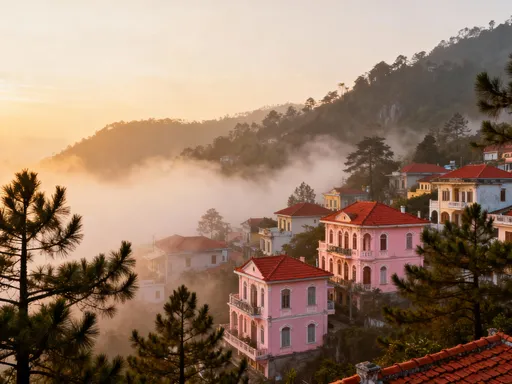
The visual contrast with other Vietnamese cities is immediate and striking. Instead of neon signs and concrete towers, Da Lat’s skyline is dotted with red-tiled roofs and gabled dormers peeking above a sea of pine and eucalyptus. Pastel-hued villas in soft yellow, pale pink, and mint green line quiet streets, their facades softened by decades of mountain weather. Many structures appear to grow from the landscape rather than impose upon it. The absence of urban chaos creates a contemplative atmosphere, perfect for architectural appreciation. There are no skyscrapers, few chain stores, and little evidence of mass tourism. Instead, the city maintains a village-like charm, where exploration rewards patience and attention to detail.
Because of its unique climate, Da Lat attracted attention in the early 20th century as an ideal hill station. The French colonial administration recognized its potential as a refuge from the tropical heat of the lowlands. This historical purpose continues to influence the city’s layout and aesthetic. Winding roads follow the natural contours of the hills, minimizing disruption to the terrain. Houses are often set back from the street, surrounded by gardens or hedges, giving the city a sense of privacy and seclusion. Even newer developments tend to respect this low-density, nature-integrated approach. As a result, Da Lat remains one of Vietnam’s most visually cohesive urban environments—a rare blend of human design and natural harmony.
French Colonial Legacy: Where History Still Lives in Brick and Stone
The architectural soul of Da Lat is deeply rooted in its French colonial past. Between 1907 and 1945, the French developed the city as a retreat for administrators, military officers, and wealthy families seeking relief from the oppressive heat of the south. They brought with them European design sensibilities, adapting them to the local climate and materials. The result was a distinct architectural style—alpine-inspired villas with red clay tiles, exposed wooden beams, and stone foundations. These homes often featured high ceilings, large verandas, and shuttered windows, allowing for natural ventilation and protection from rain.
Today, hundreds of these colonial-era buildings still stand, scattered across the city. Some have been meticulously restored and repurposed as boutique hotels, museums, or government offices. Others remain in private hands, their original grandeur evident despite years of wear. The most iconic examples display classic elements such as arched doorways, wrought-iron balconies, and symmetrical façades. The use of local materials—like volcanic stone and hardwood—gave these structures durability, helping them withstand decades of humidity and seasonal rains. Even now, the craftsmanship is evident in the hand-carved moldings, intricate railings, and carefully laid brickwork.
One of the most enduring legacies of this period is the way architecture was integrated into the natural landscape. Unlike colonial projects in other parts of Southeast Asia, which often imposed rigid grids on the land, Da Lat’s planners followed the contours of the hills. This organic approach created a city that feels nestled into its surroundings rather than built upon them. Many villas were positioned to capture morning light or overlook valleys, with gardens designed to complement the native flora. This respect for topography has contributed to Da Lat’s timeless appeal, making it a living museum of early 20th-century tropical modernism.
Preservation efforts have increased in recent years, driven by both local pride and tourism demand. While some buildings have been lost to neglect or redevelopment, others have been revived with care. Restoration projects often involve replacing damaged tiles, reinforcing foundations, and restoring original color schemes. However, challenges remain. Many colonial homes are privately owned, and not all owners can afford or prioritize conservation. Additionally, there is no comprehensive legal framework to protect all historic structures, leaving some at risk. Still, the continued presence of these buildings serves as a powerful reminder of Da Lat’s layered history—a past that continues to shape its present.
The Hidden Villas: Chasing Down Forgotten Elegance
Beyond the main tourist routes, Da Lat hides a network of residential streets where time appears to have paused. These quiet neighborhoods—often tucked into forested hillsides or winding valleys—are home to some of the city’s most evocative architecture. Here, vintage mansions stand behind moss-covered gates, their facades softened by lichen and climbing vines. Some are well-maintained, their owners preserving original details with pride. Others show signs of decay: peeling paint, sagging roofs, and shuttered windows that haven’t opened in years. Yet even in disrepair, these homes exude a haunting elegance, their silhouettes glowing in the late afternoon light.
Visitors willing to explore on foot can stumble upon extraordinary finds. A few of these villas have been converted into homestays or small cafés, offering rare access to their interiors. Stepping inside one feels like entering a forgotten world—creaky hardwood floors echo underfoot, sunlight filters through stained-glass transoms, and the scent of aged wood lingers in the air. One might find a grand staircase with a carved banister, a fireplace mantel adorned with floral motifs, or a sunroom with panoramic views of the valley. These details speak to a time when craftsmanship was central to design, and homes were built to last generations.
The condition of these villas varies widely, reflecting differing attitudes toward heritage. Some families have invested in careful restoration, blending modern comforts with original features. Others, facing financial constraints or shifting priorities, allow their homes to age naturally. In some cases, abandoned villas are slowly being reclaimed by nature—roots cracking through foundations, trees growing through broken walls. While this decay may seem tragic, it also adds to the city’s poetic atmosphere, creating scenes that feel more like film stills than real places.
These hidden homes raise important questions about memory and value. Why do some buildings survive while others vanish? What does it mean to preserve a structure that no longer serves its original purpose? In Da Lat, the answer often lies in personal connection. Families who remember grandparents hosting tea parties in grand sitting rooms are more likely to maintain them. Meanwhile, younger generations may see these homes as impractical or costly to upkeep. The fate of Da Lat’s architectural heritage, then, depends not just on policy or tourism, but on intimate, everyday choices made by those who live among it.
Modern Twists: How Da Lat’s New Architects Play With the Past
While Da Lat honors its architectural past, it is not frozen in time. A new wave of design has emerged—one that pays homage to tradition while embracing contemporary aesthetics. Modern architects and homeowners are reinterpreting colonial and alpine styles with bold colors, asymmetrical forms, and experimental materials. The result is a dynamic blend of old and new, where vintage charm meets artistic innovation. This evolution is especially visible in the city’s growing number of boutique cafés, guesthouses, and art spaces.
Many of these new buildings mimic the scale and proportions of colonial villas but introduce unexpected elements—bright blue shutters, geometric rooflines, or glass walls that dissolve the boundary between interior and forest. Some designs incorporate recycled materials, such as reclaimed wood or repurposed bricks, adding sustainability to their appeal. Others use modern insulation and energy-efficient windows to meet current living standards without sacrificing visual harmony. The goal is not imitation, but dialogue—creating structures that feel at home in Da Lat’s landscape while expressing a fresh perspective.
This trend has been fueled in part by social media, where visually striking buildings attract attention and visitors. The rise of “Instagrammable” architecture has led to the creation of spaces designed specifically for photography—curved staircases, mirrored walls, floral tunnels, and rooftop terraces with panoramic views. While some critics argue this prioritizes aesthetics over authenticity, others see it as a natural evolution. After all, Da Lat has always been a place of imagination and escape. If today’s architecture inspires wonder and connection, it continues a long tradition.
What sets Da Lat apart from other cities experiencing similar trends is the restraint many designers show. Even the most modern buildings tend to respect the city’s scale and natural surroundings. Rarely do they exceed two or three stories, and open space is preserved wherever possible. This sensitivity ensures that new construction enhances rather than overwhelms the existing environment. In this way, Da Lat offers a model for how cities can grow without losing their soul—a balance between progress and preservation that feels both intentional and heartfelt.
Religious Structures: Spiritual Design Meets Natural Harmony
Among Da Lat’s most striking architectural landmarks are its religious sites—places where design, spirituality, and nature converge. Churches and pagodas in the city are not merely places of worship; they are integral parts of the visual and cultural landscape. Built with attention to light, space, and symbolism, they reflect both local beliefs and global influences. Their architecture invites contemplation, offering moments of stillness amid the journey of exploration.
One of the most renowned is Domaine de Marie, a Catholic church perched on a hilltop with sweeping views of the city. Constructed in the 1940s, it combines Romanesque elements with Vietnamese craftsmanship. The twin bell towers rise above a pink façade, while the interior features stained-glass windows that cast colorful patterns on stone floors. Statues of saints and the Virgin Mary are adorned with traditional Vietnamese ao dai, a subtle fusion of cultures. The surrounding gardens, filled with roses and winding paths, enhance the sense of serenity. Visitors often pause here not only to admire the architecture but to experience its quiet dignity.
Another notable site is Linh Phuoc Temple, also known as the “Broken Glass Temple” for its intricate mosaics made from recycled glass and porcelain. While more eclectic in style, it demonstrates the same commitment to detail and symbolism. Dragons coil around pillars, stupas rise amid mirrored courtyards, and a towering Buddha statue watches over the complex. The use of reclaimed materials gives the temple a shimmering, otherworldly quality, especially in sunlight. Though some may find its aesthetic overwhelming, it reflects a distinctly Vietnamese approach to sacred space—one that values vibrancy, narrative, and craftsmanship.
What unites these sites is their integration with the natural world. Both temples and churches in Da Lat are often surrounded by gardens, forests, or open fields. Paths meander through trees, water features add the sound of flowing streams, and open courtyards invite birds and breezes. This harmony between built and natural environments reflects a deeper philosophy—one that sees spirituality not as separate from nature, but as deeply entwined with it. For visitors, these spaces offer more than photo opportunities; they provide moments of reflection, a chance to slow down and feel grounded.
Practical Guide: How to Explore Da Lat’s Architecture Like a Pro
To truly appreciate Da Lat’s architectural richness, a thoughtful approach is essential. The best time to explore is early morning or late afternoon, when the light is soft and golden, casting long shadows and enhancing textures. Midday sun can be harsh, flattening details and making photography difficult. Mornings also offer clearer skies, as afternoon fog often rolls in from the hills. A light jacket is advisable year-round, as temperatures can dip, especially at higher elevations.
Walking is the ideal way to experience the city. Comfortable shoes are a must—many streets are uneven or sloped, and sidewalks can be narrow or absent. Begin in the city center and gradually move outward into quieter residential areas. The neighborhood around Yersin Park and Tran Phu Street offers a high concentration of colonial villas, while the road leading to Valley of Love provides scenic views and a mix of old and new designs. For a more immersive experience, consider renting a bicycle or hiring a local guide who specializes in cultural or architectural walks. Many guides can share stories about specific buildings, their histories, and the families who lived in them.
Photography enthusiasts should bring a wide-angle lens to capture full façades and a polarizing filter to manage glare on glass and wet surfaces. However, it’s important to be respectful when photographing private homes. Avoid entering gated properties without permission, and refrain from using drones near residential areas or religious sites. If a building is clearly occupied, limit shots to public views. When in doubt, a polite nod or smile goes a long way.
One of the joys of exploring Da Lat’s architecture is combining it with the city’s vibrant coffee culture. Many historic homes have been transformed into cafés, where visitors can enjoy a warm drink while admiring original woodwork or garden views. Look for places with high ceilings, large windows, and indoor plants—signs of a preserved interior. These spots offer not just refreshment, but a chance to experience architecture from within. Whether sipping coffee in a sunlit atrium or browsing books in a converted study, these moments deepen the connection to the city’s past.
Why This Matters: Preserving Beauty in a Changing Vietnam
Da Lat’s architecture is more than a collection of old buildings—it is a living record of cultural exchange, adaptation, and resilience. In a country experiencing rapid urbanization, where concrete towers rise in every major city, Da Lat stands as a quiet counterpoint. Its commitment to design integrity, environmental harmony, and historical continuity offers valuable lessons. Preserving these structures is not merely about nostalgia; it is about safeguarding identity, craftsmanship, and sustainable living.
Each villa, church, and café tells a story—not just of who built it, but of how people once lived. These buildings reflect values that are increasingly rare: attention to detail, respect for materials, and a deep connection to place. In an age of mass production and disposable design, they remind us that beauty and function can coexist. Moreover, they demonstrate how architecture can respond thoughtfully to climate and landscape, offering insights for future urban planning.
The challenge now is ensuring that Da Lat’s unique character endures. While tourism brings economic benefits, it also pressures owners to modify or replace historic homes for short-term gain. Without stronger preservation policies and community engagement, some of the city’s most treasured structures may be lost. Yet there is hope. Growing appreciation—both locally and internationally—for Da Lat’s architectural heritage suggests a shift in values. More young architects are studying traditional techniques, and more travelers are seeking meaningful, place-based experiences.
In the end, Da Lat invites us to see beauty not just in the new, but in the endured. Its buildings are not relics; they are participants in an ongoing story. To walk its streets is to witness how the past can inform the present, how design can inspire reverence, and how a city can grow without forgetting who it is. For those willing to look closely, Da Lat offers not just a visual feast, but a quiet call to preserve what is fragile, meaningful, and true.